How much does an architectural project cost in Portugal? Fees and calculation (2026)
In Portugal, architectural fees sit, in most cases, between 3% and 12% of the estimated construction cost — and the exact figure depends on complexity, size and the phases engaged. This guide explains the three fee models, shows the calculation step by step and tells you exactly what should be included.
1. The three fee models
Percentage of the construction cost — the most common and transparent method: fees track the real size of what is being designed. Fixed fee — closed upfront based on the brief; it gives the client full predictability on well-defined projects. Hourly — used for consultancy, expert opinions and small interventions, typically between €50 and €150/hour depending on the professional’s experience.
2. The percentage method, from the inside
Since fees were liberalised, there are no mandatory tables — the percentage is agreed case by case. Four factors make it vary: complexity (rehabilitation and heritage require more design hours than new construction), size (larger projects dilute fixed costs and admit lower percentages), use (tourism, retail and industry have technical requirements of their own) and the phases engaged — from preliminary study to site assistance.
AREA × COST/m²
estimate of the construction cost
×
PERCENTAGE
3% to 12%, depending on the case
=
FEES
architecture + coordination
3. A step-by-step example
A 200 m² single-family house, built from scratch, average cost €1,400/m² and a 5% percentage:
- Estimated construction cost: 200 m² × €1,400 = €280,000
- Architectural fees: 5% × €280,000 = €14,000
- With the engineering disciplines included, the total design investment typically sits at 6–8% of the works.
Note the order of the sums: fees are set from the construction cost — and it is precisely the architect’s work that keeps that cost within budget. See how much building costs in 2026.

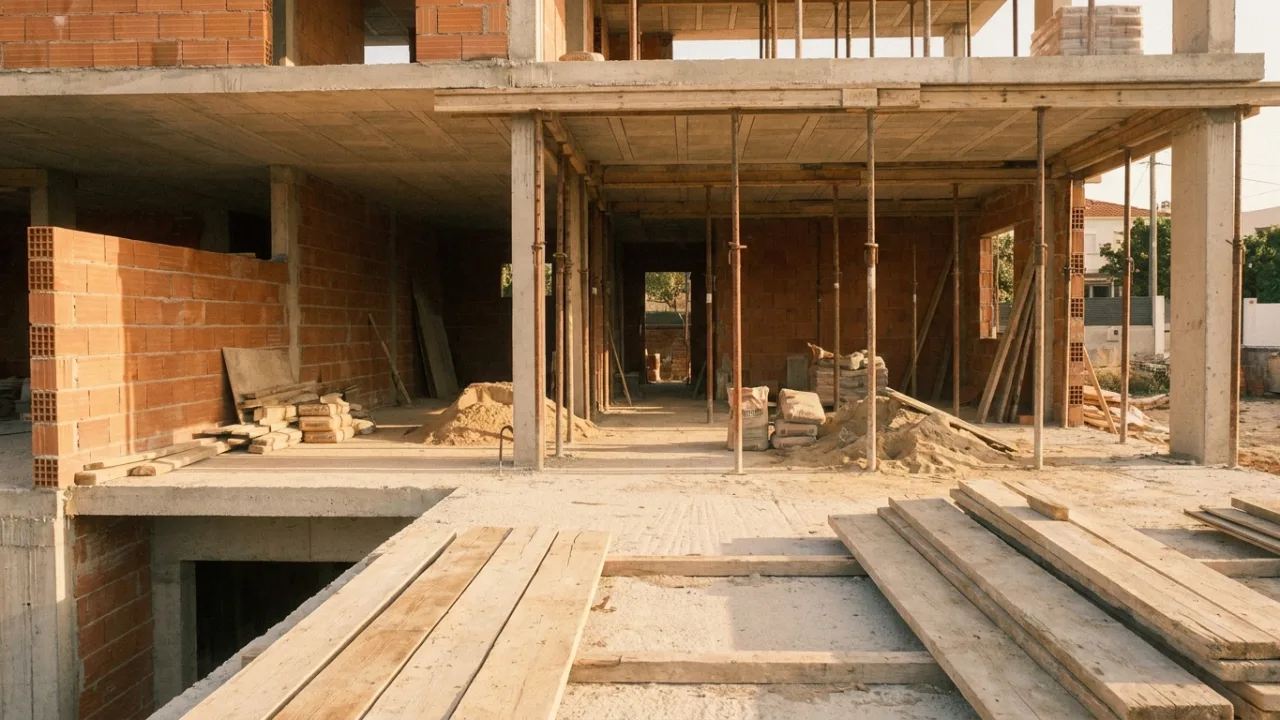
From preliminary study to site: fees pay for a process, not a drawing.
4. What is included — and what is not
A complete architecture contract covers the brief, the preliminary study, the planning application design (including handling the application with the municipality), the detailed design and technical site assistance. Always confirm separately: engineering designs (structure, services, thermal, acoustics), topographic survey, geotechnical study and permanent site supervision — these can be included or engaged autonomously, and comparing proposals is only honest when it compares the same scope.
“Cheap fees with a short scope are the most expensive deal in construction: what you save on the design you pay on site, with interest.”
Tiago R. Correia
Architect
Permitting changed in 2026 — and the rigour of the design gained added weight in the client’s protection. See the complete guide.
Frequently asked questions
Why are there no longer fee tables?
They were abolished under competition law: each studio freely sets its own values. Transparency now lives in the contract — scope, phases, deliverables and calculation criteria in writing.
Can I engage only the planning application?
You can, but it rarely pays off: the detailed design is what protects the construction budget, and technical assistance is what guarantees that what was designed is what gets built.
Are fees paid all at once?
No — they are phased with the work: typically a payment on appointment and instalments per completed phase (preliminary study, permitting, detailed design, site).
And for small refurbishments?
On smaller interventions a fixed fee or hourly rate is common, because the percentage of a small job does not pay for the real technical hours.
Would you like a fee proposal for your project?
Describe what you have in hand — plot, building or idea — and we will return a proposal with scope, phases and fixed values.
-
No tags found