Seismic vulnerability assessment: when it is mandatory and what it involves
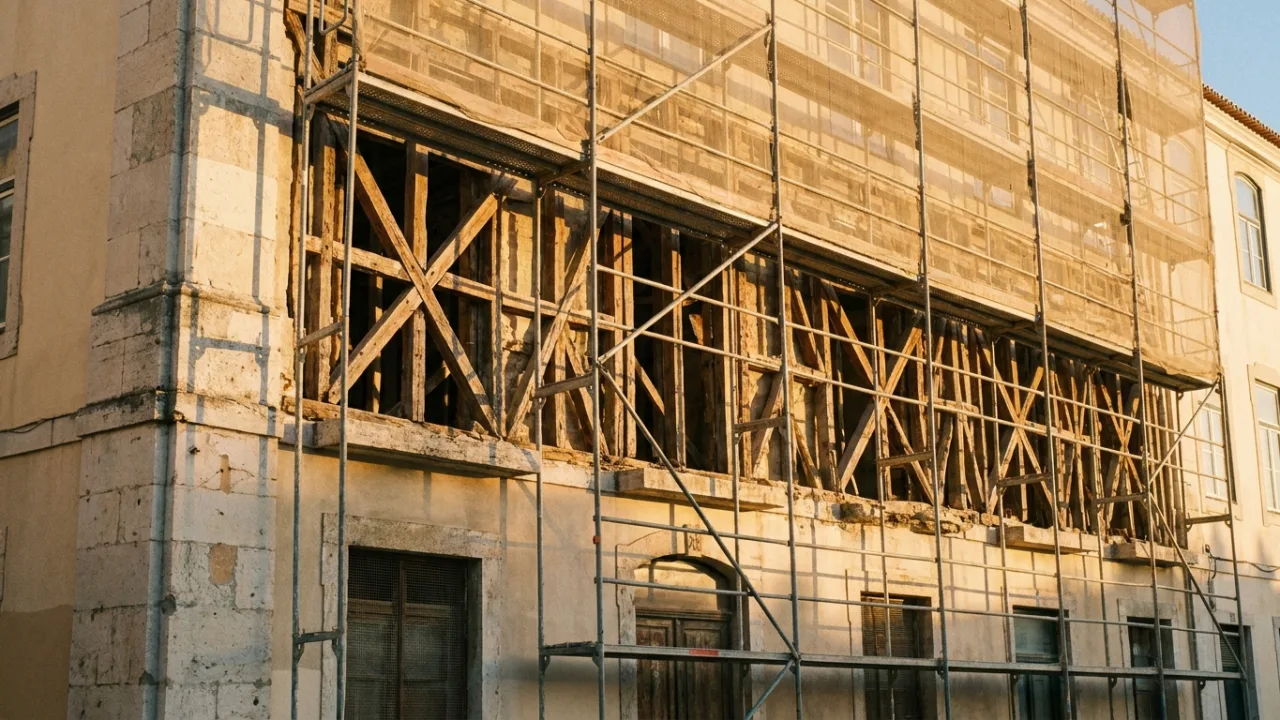
In a seismic country, rehabilitating without assessing the structure is a risk the law now regulates: since 2019, many rehabilitation works require a seismic vulnerability assessment report — and, when the result is insufficient, a strengthening design. Here is when it is mandatory, what it involves and why it matters even when it is not.
1. When it is mandatory
REHABILITATION WORKSextension · alteration · reconstruction
TRIGGERS (one is enough)
· evident signs of structural degradation
· change to the structural behaviour
· intervention area > 25% of the gross area
· cost > 25% of an equivalent new build
· class III and IV buildings (schools, hospitals)
ASSESSMENT REPORTsubmitted with the design
SEISMIC STRENGTHENINGif safety is insufficient
The assessment is mandatory, among other cases, when the intervention area exceeds 25% of the building’s gross area or the cost of the works exceeds 25% of the cost of an equivalent new construction — and strengthening is required when safety falls below 90% of what is demanded.
Source: Portaria n.º 302/2019 (DL 95/2019 regime) — Diário da República
2. What the study involves
Characterisation — survey of the existing structure, materials and pathologies; in old buildings this is serious diagnostic work, not desk work. Assessment — verification of the load-bearing capacity against the regulatory seismic action (Eurocode 8). Conclusions — either safety is sufficient, or the strengthening design becomes part of the operation. The report enters the application together with the architectural design — too late means redesigning.
3. Why it matters even when it is not mandatory
In Lisbon and much of the country, the older building stock — masonry, «placa», «gaioleiro» — has well-known vulnerabilities. Assessing before buying or investing is a risk-management measure: the cost of the study is a fraction of the strengthening, and strengthening planned at design stage costs a fraction of improvised solutions on site. With the new technical framework of 2026, the designer’s responsibility for these choices has only increased.
“In an old building, the question is not whether the earthquake will come — it is whether the structure you are about to buy has already answered that question.”
Tiago R. Correia
Architect
Frequently asked questions
Does it apply to houses?
It applies to extension, alteration or reconstruction works that hit the triggers — regardless of use. Small interior refurbishments are, as a rule, out of scope.
Who prepares the report?
Structural engineering, in coordination with the architecture — in our case, integrated from the preliminary study so that the strengthening solutions serve the design rather than fight it.
How much does it cost?
It depends on the size and on access to the structure; it is typically a small fraction of the value of the works — and one of the most meaningful investments in safety that budget can carry.
Rehabilitating an old building?
We integrate the seismic assessment into the design from day one — diagnosis, solutions and permitting without surprises.
-
No tags found

26 de March de 2026