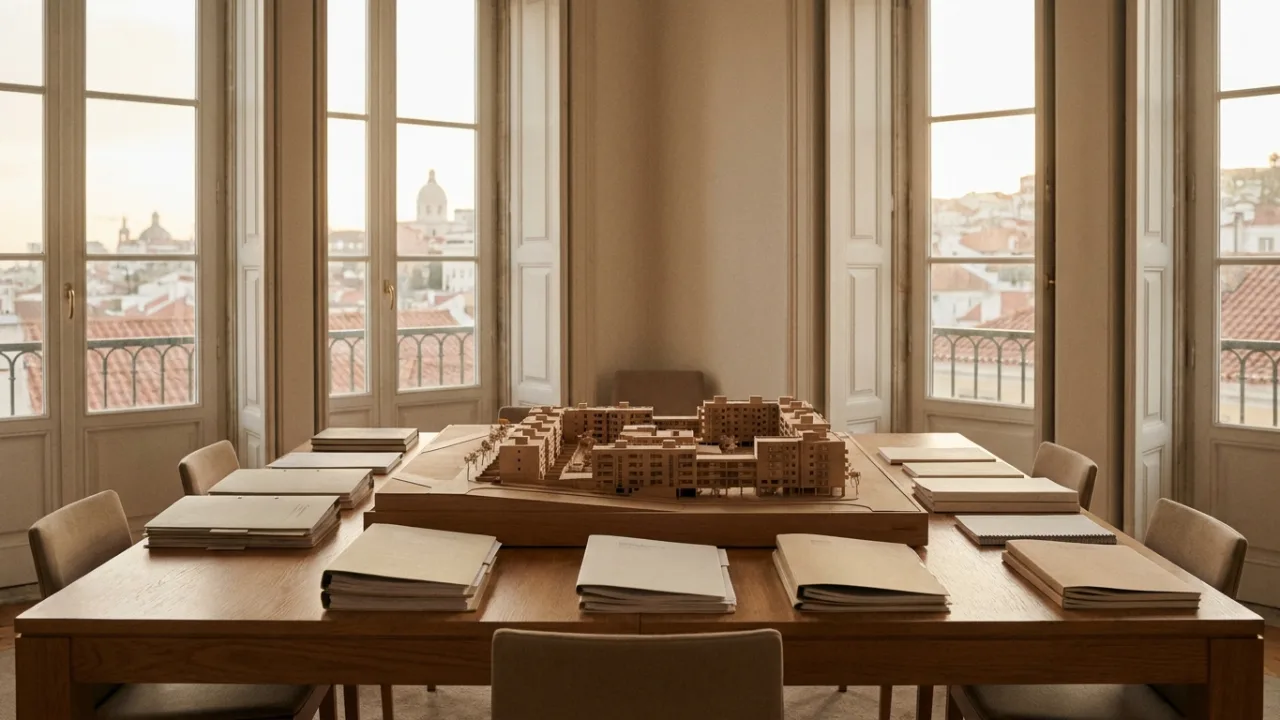
The five phases of a real estate project: from feasibility to delivery
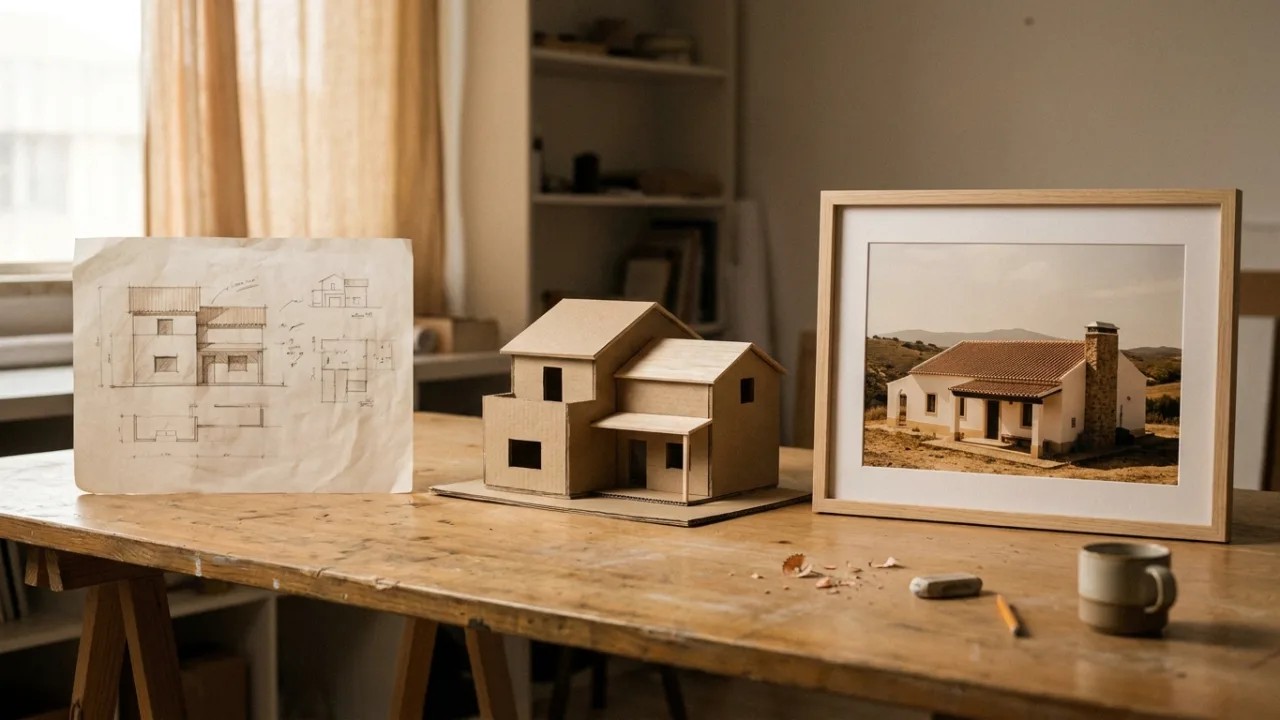
Every real estate project — from a single house to a multi-unit development — goes through the same five phases. What sets the successful ones apart is the order of the decisions: each phase answers a question, and skipping questions is at the root of a large share of delays and cost overruns. Here is the full journey, from idea to delivery.
1. Feasibility — what is possible, and for how much
Everything starts with the right question: what can this plot or building become? Reading the PDM (municipal master plan) and the constraints, the indices, the programme scenarios and the first numbers. It is the lowest-cost phase of the whole process — and the one that most shapes the financial outcome. This is where a purchase is negotiated well or an expensive mistake avoided; it is precisely the work of LANDSCOPE.
2. Design — from concept to detail
Brief, preliminary study, developed design and detailed design, with the engineering disciplines coordinated from early on. The golden rule of 2026: with prior control reduced and the RGEU still in force until the new technical rules, the rigour of the design is the client’s main protection — and the quality of the detailed design is what keeps the construction budget on track.
3. Permitting — the right route, complete at first submission
Planning permission, prior notification or exemption: the route determines deadlines and risk. With DL 108/2026 in force since 1 October 2026, deadlines shorten and technical responsibility increases — the complete permitting guide explains the whole framework.
4. Construction — building what was designed
Specifications, careful selection of the contractor, a clear contract — and technical assistance from the design team through to the end. Overruns almost always stem from incomplete designs or improvised changes; a well-prepared construction phase is boring, and that is how it should be.
5. Delivery and value — the asset at work
Use permit, certifications, as-built drawings — and the product on the market. For a full cycle, plan for 24 to 48 months depending on scale; the numbers behind all of this are in the article on IRR and ROI.
“The five phases are not bureaucracy in series — they are five questions in the right order. Whoever answers them out of order pays to answer them twice.”
Tiago R. Correia
Architect
Frequently asked questions
Can I shorten the process?
You can cut the dead time — a complete application, disciplines in parallel, a strategic prior information request (PIP) — but not the phases. Skipping feasibility or saving on the detailed design usually proves expensive.
When should I involve the architect?
Before buying: phase 1 exists to protect the acquisition decision. After the deed, the room to optimise has already shrunk.
Does the process change for rehabilitation?
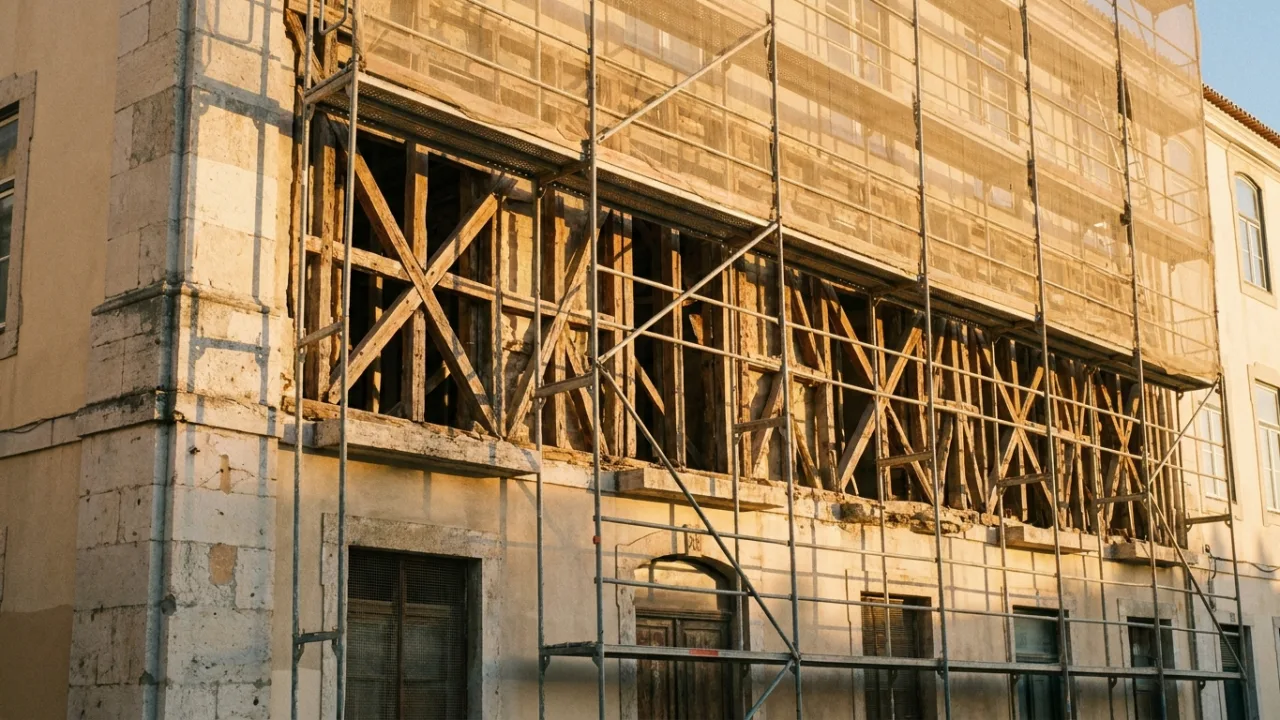
The phases are the same, with a reinforced diagnosis in phases 1 and 2 — including, where applicable, the seismic vulnerability assessment.
What phase is your project in?
From feasibility to delivery, we follow the full cycle — and we can step in at any phase with a diagnosis of what was left undone in the previous ones.
-
No tags found