Before buying a plot: ten steps to check
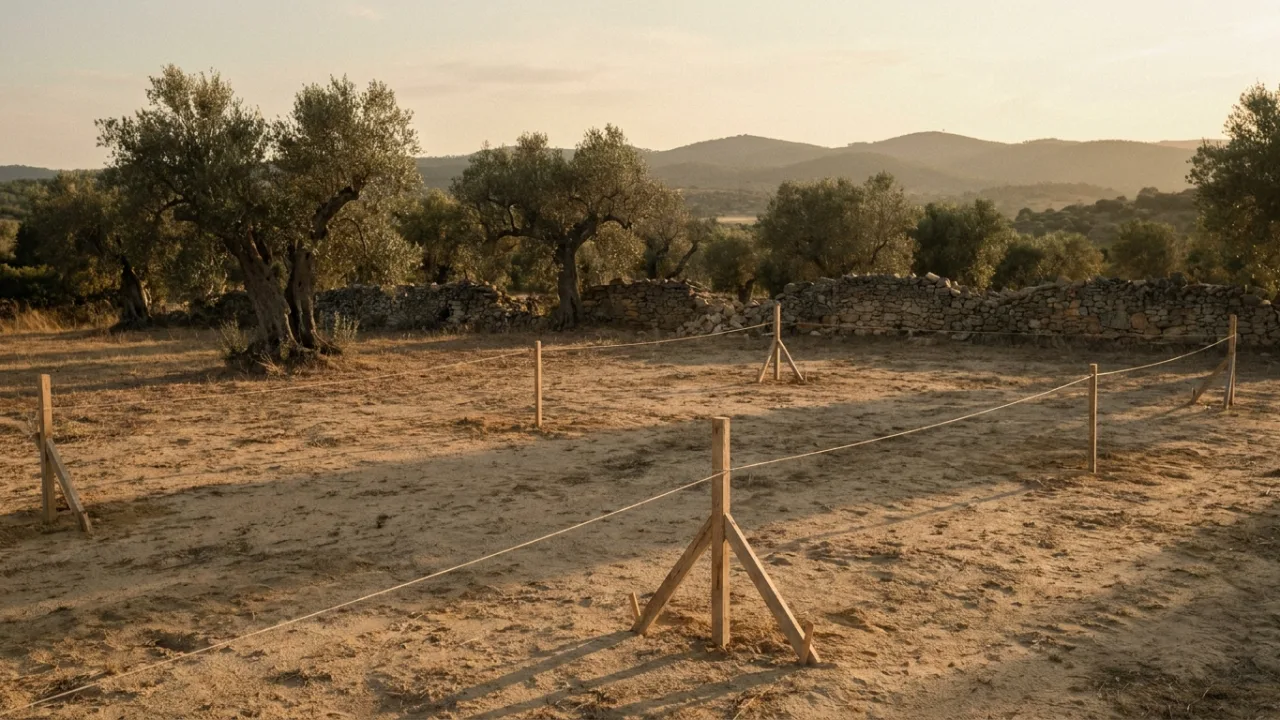
Buying a plot of land is a decision that is hard to reverse: what the plot allows — or does not allow — to be built is determined long before the deed. These are the 10 steps we check before any acquisition, organised in working order.
1
GOAL
2
DOCUMENTS
3
PDM AND NETWORKS
4
THE LAND
5
NUMBERS
The full journey — each phase eliminates a type of risk before the deed.
1. Define the goal before searching
Step 1 — The purpose of the purchase. Own home, income building, resale with appreciation? Each goal calls for a different type of plot — and changes all the criteria that follow.
Step 2 — The right location for that goal. Access, services, surroundings and the area’s urban dynamics. For an own home, daily life counts; for investment, demand and future liquidity.
2. Check the documents
Step 3 — The documentary check. Before assessing the potential, confirm what the land is, on paper:
| Document | Where to obtain it | What it confirms |
|---|---|---|
| Land registry certificate | Registry office / Predial Online | Ownership, charges, mortgages and attachments |
| Property tax document (caderneta predial) | Tax portal (Portal das Finanças) | Tax record, areas and fiscal status |
| Location plan | Municipal council / municipal GIS | The plot’s boundaries and abutters |

Before the price, the potential: what the plot allows to be built defines its value.
3. Read the land the way the municipality reads it
Step 4 — The PDM. The land classification and the applicable parameters determine use and buildability. Without this reading, any price is a guess.
The PDM determines the use and buildability of each plot — no verbal promise substitutes consulting the zoning plan and the regulation.
Source: RJUE — DL n.º 555/99, current wording — Diário da República
Step 5 — The infrastructure. Water, drainage, electricity and telecommunications: the existence (or not) of public networks changes the budget — and sometimes the very feasibility.
This is exactly the reading LANDSCOPE delivers, from 48 hours: framework, constraints and building potential — before you sign.
4. Assess what the eyes cannot see
Step 6 — Soil and topography. Steep slopes make foundations and retaining walls more expensive; in sensitive areas a geotechnical study is warranted.
Step 7 — Easements and restrictions. REN, RAN, water domain, power lines, protection strips and risk zones constrain — or preclude — the footprint.
Step 8 — Environmental requirements. In protected or sensitive areas, environmental assessments may apply, with their own costs and timelines. Knowing before buying is the difference between planning and being surprised.
“The fair price of a plot is not in the listing — it is in what the PDM lets rise there.”
Tiago R. Correia
Architect
5. Decide based on the numbers
Step 9 — The building feasibility. How many square metres can you really build? Which unit types? The value of a plot is a function of what can rise there — not of the listing. In rustic areas, mind the special regime of the Land Law.
Step 10 — The price and the team. Compare the price with the verified building potential and close with professional support — legal and technical. A favourable prior information request, which binds the municipality for 2 years, provides legal certainty at a low cost; see how it works in the 2026 building permitting guide.
The most frequent and most costly mistake
It is not the undeclared mortgage or the slope of the land — it is valuing the plot by what one imagines building, rather than by what the PDM allows. Whoever anchors the negotiation on imagined potential pays for maximum potential; whoever anchors it on verified potential pays what the plot is worth. The difference frequently runs to tens of thousands of euros — precisely what is at stake when the checks on this list are skipped.
Frequently asked questions
Can I build housing on rustic land?
As a rule, no. Since 2024 there is a special reclassification regime for housing, but with demanding requirements and several exclusions — we explain it in the article on the new Land Law.
What exactly is building feasibility?
It is the reasoned answer to the question «what can I build here?»: use, area, number of floors and constraints, calculated from the PDM and the applicable regulations.
Is it worth requesting a PIP before buying?
Almost always — especially on plots with constraints. A fully favourable PIP binds the municipality for 2 years and gives you real legal certainty before the deed.
Found a plot? Confirm the building potential before the deed.
Send us the property document and the location — we return an independent technical reading of the potential and the risks, from 48 hours.
-
No tags found