Rural tourism in Portugal: modalities, rules and investment
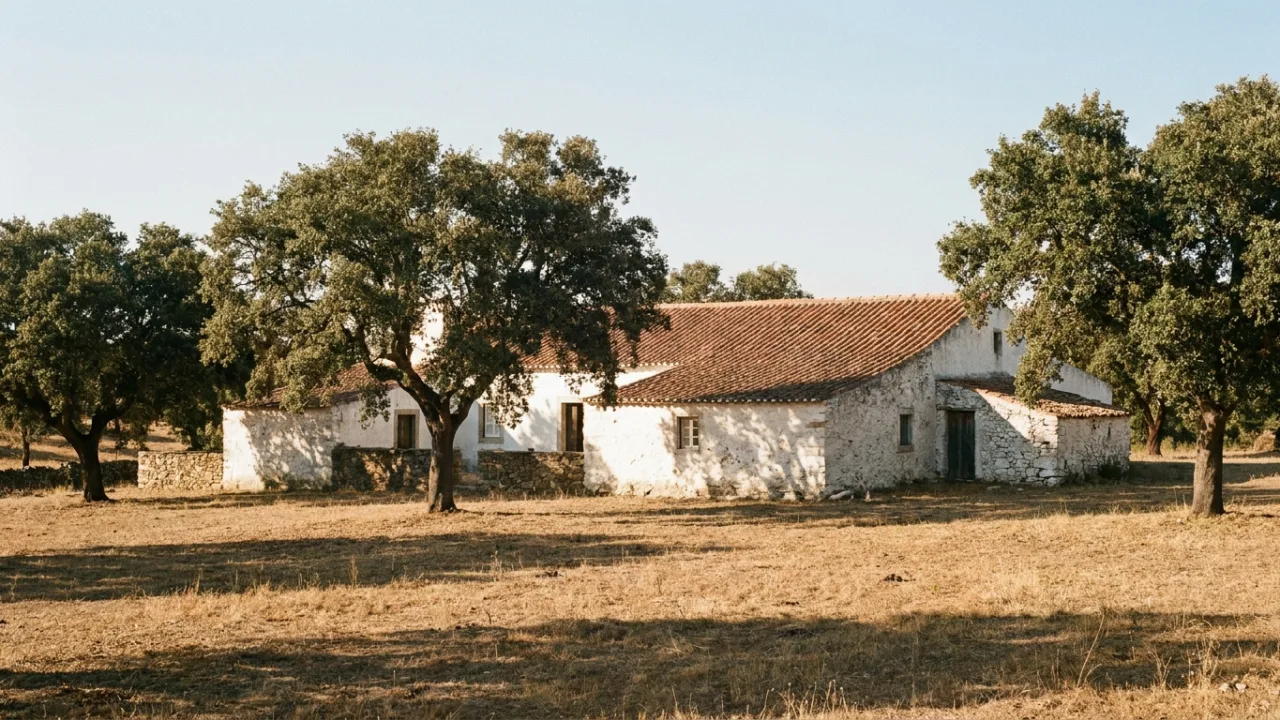
Rural Tourism (Turismo em Espaço Rural — TER) is the category that allows rural heritage to be turned to tourist use without stripping it of character. The law recognises three modalities, each with its own logic. It is also worth knowing what the law does — and does not — require on accessibility.
1. The three TER modalities
COUNTRY HOUSEadapted rural property
AGROTOURISMworking farm
RURAL HOTELhotel scale in a rural setting
all integrated into their surroundings
AGROTOURISMworking farm
RURAL HOTELhotel scale in a rural setting
all integrated into their surroundings
Country house (casa de campo) — the rural property adapted to accommodation while keeping its original features; the entry door to TER. Agrotourism — integrated into a working farm, where the farm experience is the product. Rural hotel — hotel scale in a rural context, with full services and architecture integrated into the landscape.
2. Accessibility: what the law asks of TER
The technical accessibility standards of DL 163/2006 apply to the design and construction of every tourism development. What manor-house tourism and TER do not have is the obligation to provide facilities and at least one accommodation unit for guests with reduced mobility.
There is an exception within the exception: rural hotels do carry that obligation (Portaria n.º 937/2008, art. 25(2)). In a country house or agrotourism set in an old building, the RJET does not require an adapted room; the design still follows the DL 163/2006 standards, which provide an exemption regime for existing buildings. The remaining rules still apply: the PDM, fire safety and the minimum requirements of the chosen modality.
3. Intervening without losing character
The value of a TER lies in authenticity — and the right intervention is the one that serves it. Local materials (stone, lime, wood, roof tile), reuse of the existing structures, integration into the topography and discreet energy efficiency. It is not about imitating the old: it is about a contemporary language that respects the place — and it is that well-resolved tension that separates publishable projects from generic ones.
“In rural tourism, luxury is the truth of the place: walls that tell stories, real silence and design that does not compete with the landscape.”
Tiago R. Correia
Architect
To go further, see the tourism development guide — categories, timelines and numbers — and validate the property with LANDSCOPE.
Frequently asked questions
Do I need to live on the property?
No. In TER — country houses, agrotourism and rural hotels — the owner or operator may or may not live on site (Portaria n.º 937/2008, art. 3). Residence during the operating period is only required in manor-house tourism (turismo de habitação).
Can I build from scratch on rustic land?
Only for a rural hotel: it is the only TER modality that may be set up in a newly built building (RJET, art. 18(7)). Country houses and agrotourism start from the reconstruction, rehabilitation or extension of existing buildings. In every case, the municipal PDM decides whether the use is allowed on that land and with which parameters.
TER or holiday rental (AL)?
Alojamento local (AL) is the regime for those who provide accommodation without meeting the requirements of a tourism development, with its own registration. A TER is a tourism development: it is classified and meets the minimum requirements of Portaria n.º 937/2008, such as mandatory breakfast and minimum room sizes.
Do you own a farm or rural house with potential?
We assess TER suitability, design the right intervention and manage the permitting — with the respect the place deserves.
-
No tags found